Mobility Warm-Up
Pre-training mobility routines for gym sessions and running, activating key joints, priming movement patterns, and reducing injury risk.
The pre-training warm-up serves one purpose: prepare the body for the work ahead. It is not a mobility session in itself; it is the minimum necessary to train safely and effectively.
General Principles
| Principle | Application |
|---|---|
| Dynamic, not static | Move through ranges, do not hold stretches |
| Specific | Prime the movements you are about to perform |
| Brief | 5 minutes maximum |
| Progressive | Start small, build to full range and speed |
Static stretching (holding a stretch for 30+ seconds) before training reduces power output by 5–10% for up to 30 minutes and does not reduce injury risk. Save static stretching for after training or rest days. Pre-training mobility is dynamic, moving through ranges without prolonged holds.
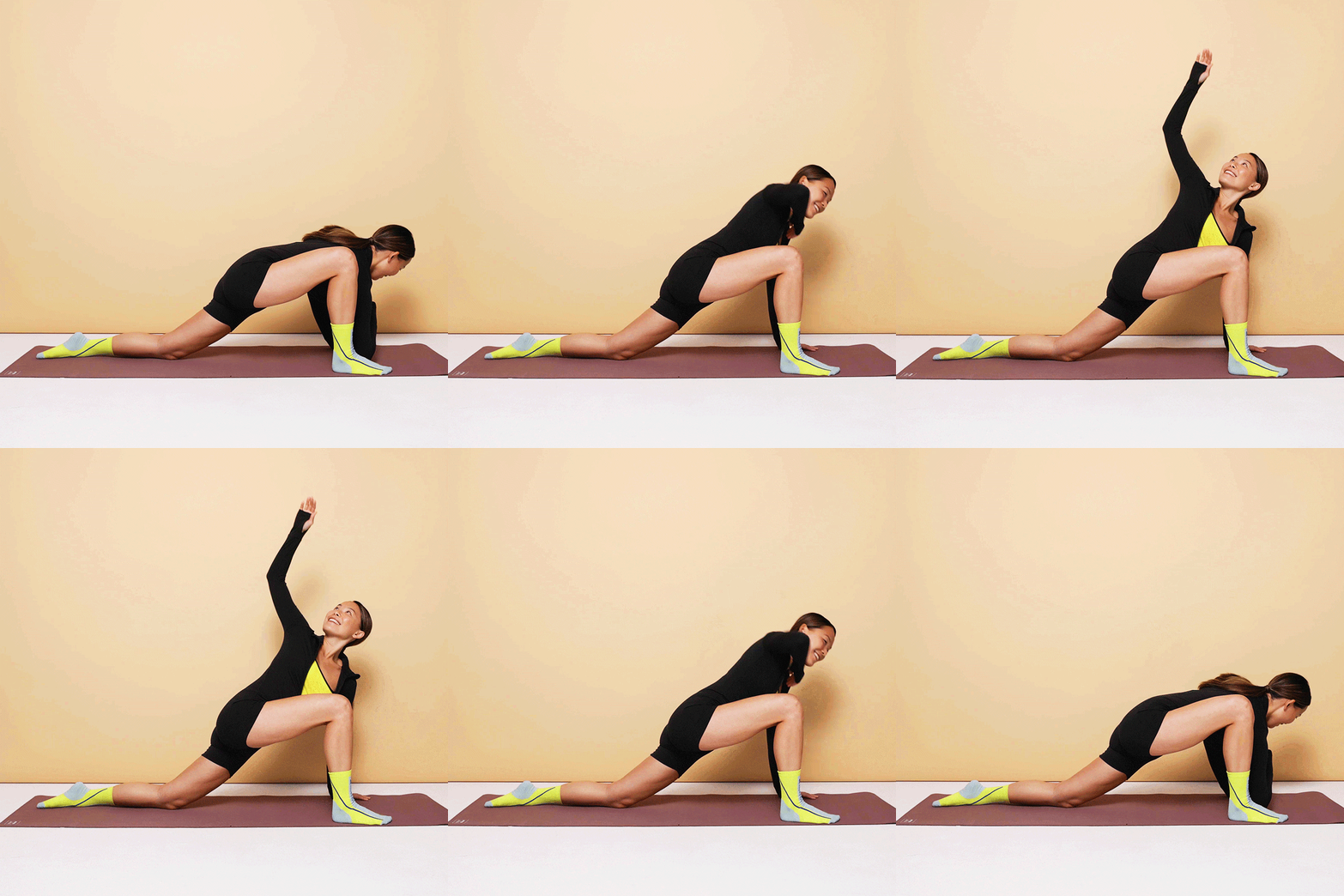
Gym Warm-Up (3–5 minutes)
Phase 1: General Movement (1–2 minutes)
- Light jogging on the spot or walking for 60 seconds
- Arm circles (forward and backward, 10 each)
- Bodyweight squats (10 reps, full range)
Phase 2: Dynamic Mobility (1–2 minutes)
- Thoracic rotations (5 per side)
- Leg swings, forward/backward (10 per leg)
- Leg swings, lateral (10 per leg)
- Hip circles (5 each direction)
Phase 3: Specific Priming (1 minute)
Before your first exercise, perform 1–2 warm-up sets at 50% and 75% of working weight. This primes the specific movement pattern and prepares the nervous system.
The warm-up sets on your first exercise are the most important part of the gym warm-up. The general movement and mobility work get you ready to move; the warm-up sets get you ready to lift. Do not skip them to save time.
Running Warm-Up (5–8 minutes)
This is the same warm-up documented in the Running Warm-Up page. See that page for the complete protocol.
Quick Reference
- Light jogging (2–3 minutes)
- Leg swings: forward and lateral
- High knees: hip flexor activation, cadence patterning
- Butt kicks: hamstring activation
- Dynamic hamstring swings
- Ankle rocks: ankle preparation
- Walking lunges: hip mobility under load
- Calf raises (15–20 bodyweight reps)
For hard run sessions, add 2–3 × 50 m primer strides after the warm-up.
What to Avoid
| Don't | Because |
|---|---|
| Static stretching | Reduces power; does not prevent injury |
| Foam rolling extensively | Better placed post-training or on rest days |
| Skipping the warm-up entirely | Cold tissues at load = heightened injury risk |
| Excessive warm-up | Fatigue before the session begins defeats the purpose |
If you are short on time, do a shorter warm-up, not no warm-up. Even 90 seconds of dynamic movement (leg swings, bodyweight squats, arm circles) is far better than starting cold.
Weather Adjustments
| Condition | Adjustment |
|---|---|
| Cold (under 15°C) | Extend general movement phase by 2–3 minutes |
| Hot (over 30°C) | Standard warm-up; body temperature is already elevated |
| Early morning | Warm-up may need to be slightly longer: core temperature is lowest upon waking |
| Indoors (gym) | Standard warm-up; air-conditioned environment is consistent |