Calves
Calf capacity, stretch tolerance, and load management, addressing the primary running-related mobility limitation through strength and mobility work.
The calves are the primary spring during running; they absorb and return several times bodyweight with each step. Calf tightness is common among runners and can contribute to Achilles tendinopathy, plantar fasciitis, and shin splints.
Atlas addresses calf mobility through capacity (strengthening), not just stretching.
Why Stretching Alone Is Insufficient
Tight calves are often a protective response to inadequate capacity. If the calf-Achilles complex cannot handle the loads imposed by running, the nervous system increases muscle tone (tightness) as a protective strategy. Stretching alone does not address the underlying issue; the tissue needs to be both strong and extensible.
Think of calf tightness as the body saying, "I am not confident this tissue can handle the load you are asking of it." Strengthening the calves through a full range of motion addresses the root cause; the sensation of tightness often resolves as capacity improves.
Daily Routine
Total time: approximately 3–5 minutes. Perform daily.
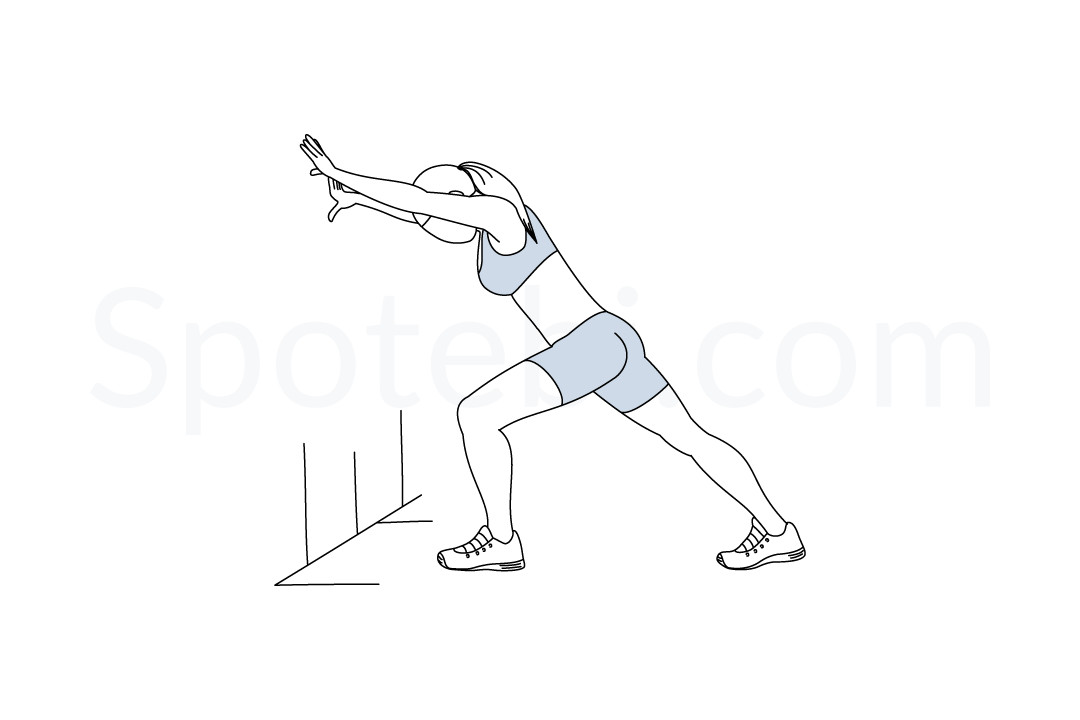
1. Standing Calf Stretch
- Position
- Hands on wall, one leg back, heel down
- Movement
- Lean forward until stretch is felt in the calf
- Hold
- 30–45 seconds per side
- Breathing
- Slow, deep breaths; exhale into the stretch
2. Soleus Stretch (Bent-Knee)
- Position
- Same as calf stretch but with back knee bent
- Movement
- Sink hips down and slightly forward
- Hold
- 30–45 seconds per side
The soleus (deeper calf muscle) is often tighter than the gastrocnemius and responds better to bent-knee stretching.
3. Eccentric Calf Raises
- Position
- Standing on a step edge, heels hanging off
- Movement
- Raise both heels, then lower slowly on one leg (3–5 second eccentric)
- Reps
- 8–12 per leg
The eccentric (lowering) phase builds calf capacity and tendon stiffness, addressing the root cause of protective tightness.
4. Tibialis Raises
- Position
- Standing with back against wall, feet 30 cm from wall
- Movement
- Raise toes toward shins
- Reps
- 15–20
Tibialis anterior strength balances calf development and has resolved previous shin splint issues.
Eccentric calf raises are the most important exercise in this section. The slow lowering phase is where the adaptation occurs; do not rush it. Three seconds minimum. Five seconds is better. If you only do one calf exercise, make it this one.
Common Mistakes
Bouncing During Stretching
Ballistic stretching (bouncing into end range) triggers the stretch reflex, causing the muscle to contract, the opposite of the intended effect. Move into the stretch slowly and hold it still.
Neglecting the Soleus
The gastrocnemius (superficial calf) crosses the knee joint. The soleus (deep calf) does not. Stretching with a straight knee targets the gastrocnemius. Stretching with a bent knee targets the soleus. Both are necessary; soleus tightness is often the primary limitation for runners.
Only Stretching
Stretching provides temporary relief but does not address the capacity deficit that causes protective tightness. The eccentric calf raises and tibialis raises build the strength that allows the nervous system to relax its protective tone.
Calf muscle-tendon complex stiffness is actually beneficial for running economy; a stiffer tendon stores and returns more elastic energy. However, this "stiffness" refers to the tendon's elastic properties, not the muscle's resting tone. The goal is a strong, elastic tendon paired with a relaxed, extensible muscle. Eccentric training improves tendon stiffness while stretch tolerance work improves muscle extensibility; together, they produce the optimal calf profile for running.