Hips
Hip flexion, extension, and rotation, maintaining the current excellent hip function to support squatting, hinging, and running stride.
Hip mobility is a current strength for this athlete; deep squat, toe touch, and overhead squat are all comfortable positions. The objective is maintenance, not dramatic improvement. Preserve what works.
Current Status
| Movement | Status | Priority |
|---|---|---|
| Deep squat | Comfortable | Maintain |
| Toe touch | Full range | Maintain |
| Overhead squat | Comfortable | Maintain |
| Cross-legged sitting | Comfortable | Maintain |
| Hip rotation | Adequate | Maintain |
The hips are the mobility success story. Unlike the thoracic spine and calves (which need focused improvement), the hips need only enough attention to preserve current function. This is a much smaller time investment.
The Maintenance Routine
Total time: approximately 2–3 minutes. Perform 3–4 times per week or after prolonged sitting.
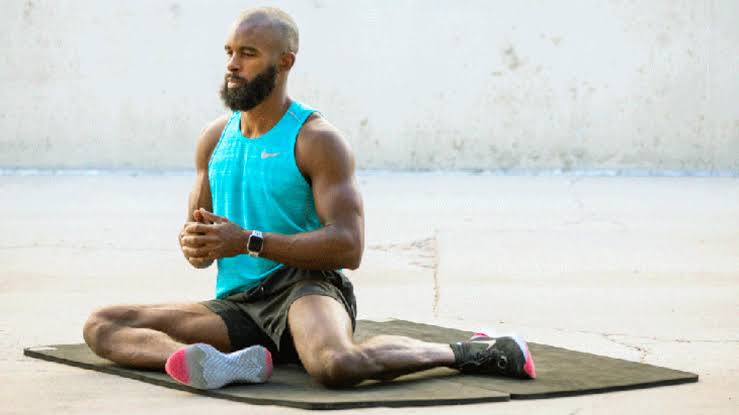
1. 90/90 Hip Stretch
- Position
- Seated, front leg bent to 90°, back leg bent to 90°
- Movement
- Sit tall; optionally lean forward over front shin
- Hold
- 30–45 seconds per side
This position maintains both internal and external hip rotation simultaneously.
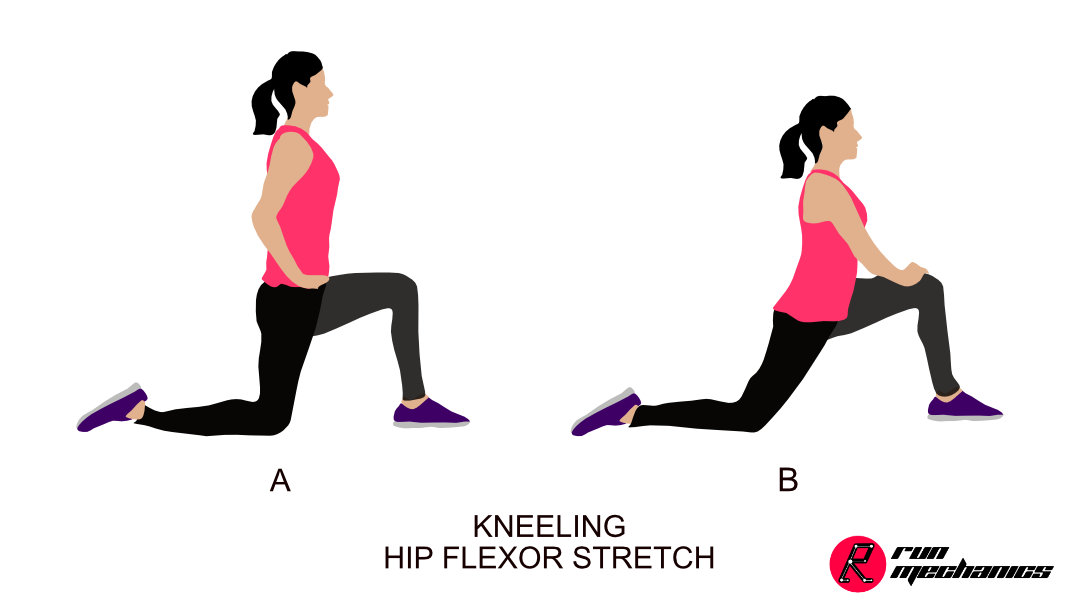
2. Hip Flexor Stretch (Half-Kneeling)
- Position
- Half-kneeling, back knee down, front foot planted
- Movement
- Tuck pelvis posteriorly (flatten the lower back) and shift forward
- Hold
- 30–45 seconds per side
Desk work shortens hip flexors. This stretch counters that adaptation and maintains hip extension range for running.
3. Deep Squat Hold
- Position
- Feet flat, heels down, squat as deep as comfortable
- Movement
- Hold the bottom position; use elbows to gently push knees outward
- Hold
- 30–60 seconds
The deep squat is already comfortable. Holding it regularly maintains the range. This is a "use it or lose it" capacity.
4. Couch Stretch (Optional)
- Position
- Half-kneeling with back foot elevated on a wall or couch
- Movement
- Tuck pelvis and shift forward to feel stretch in quad and hip flexor
- Hold
- 30–45 seconds per side
Include only if hip flexor tightness is felt during running or squatting. Otherwise, the half-kneeling stretch above is sufficient.
Hip mobility maintenance is a low-effort investment with high long-term returns. The positions you do not use, you lose. Spending 2–3 minutes in a deep squat and 90/90 position a few times per week is almost certainly sufficient to preserve current hip function for decades.
Common Mistakes
Overworking the Hips
The hips already have good mobility. Spending significant time "improving" them is inefficient; that time is better allocated to thoracic mobility and calf work. Maintenance, not optimisation.
Aggressive Stretching
Hips that already have full range do not benefit from aggressive stretching. Gentle, comfortable end-range holds are sufficient. Pain is never the goal.
Neglecting the Hips Entirely
The opposite error: because hips are currently good, neglecting them entirely. Mobility is "use it or lose it." A few minutes per week of maintenance prevents the slow decline that desk work and ageing would otherwise produce.
Hip joint health is strongly correlated with longevity and quality of life in ageing populations. Hip mobility in early adulthood (20s–30s) predicts hip function in later decades. The work done now (even the minimal maintenance described here) has compounding returns over a lifetime.