Ankles
Ankle dorsiflexion range, rocker mechanics, and foot control, improving the foundation of running gait and force absorption.
Ankle mobility directly affects running mechanics. Limited dorsiflexion (the ability to bring the foot toward the shin) alters gait, increases loading on the knees and hips, and reduces the foot's ability to absorb and return force.
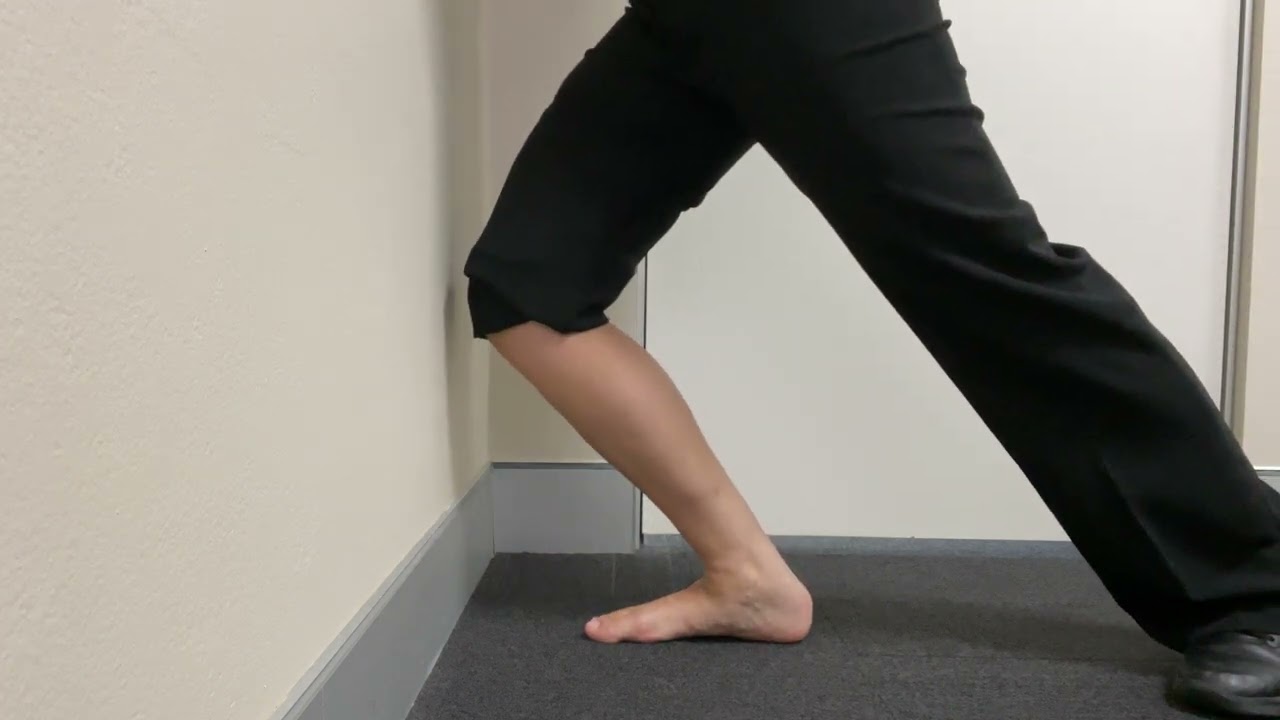
Why Ankle Mobility Matters for Running
During running, the ankle passes through a significant range of dorsiflexion during the stance phase (the foot rolls forward over the ground) and absorbs impact. If the ankle cannot dorsiflex adequately:
- The heel lifts early, reducing the foot's ability to push off
- The knee and hip absorb forces the ankle should handle
- Stride length is artificially shortened
- The risk of plantar fasciitis and Achilles issues increases
Think of the ankle during running as a rocker; the foot contacts the ground, rolls forward, and pushes off. Limited dorsiflexion flattens this rocker curve, making each step less efficient and more stressful on structures above the ankle.
Daily Routine
Total time: approximately 2–3 minutes. Perform daily.
1. Ankle Rocks (Knee-to-Wall)
- Position
- Standing facing a wall, one foot 10–15 cm from wall
- Movement
- Drive knee forward toward wall without lifting heel
- Goal
- Touch knee to wall while keeping heel down
- Reps
- 10–12 per side
This is the primary ankle mobility exercise. Measure progress by how far the foot can be from the wall while still touching the knee.
2. Ankle Circles
- Position
- Seated, one leg extended
- Movement
- Circle the foot through full range of motion: clockwise and counter-clockwise
- Reps
- 10 each direction, each foot
3. Toe Spread and Gripping
- Position
- Seated or standing, barefoot
- Movement
- Spread toes apart, then relax; grip the floor with toes, then release
- Reps
- 10 of each
Foot intrinsic muscle strength supports the arch and contributes to push-off during running.
The knee-to-wall test is a simple diagnostic: if you cannot touch the wall with your knee from 10 cm away with the heel down, ankle dorsiflexion is limited. Measure the distance from foot to wall that allows knee contact, track this monthly. Improvement indicates better ankle mobility.
Common Mistakes
Letting the Heel Lift
During ankle rocks, the heel must remain firmly on the ground. If the heel lifts, the ankle is not dorsiflexing; the foot is just changing position. Reduce the distance from the wall until the heel stays down.
Neglecting Foot Strength
Ankle mobility and foot strength are connected. Weak foot intrinsic muscles (the small muscles within the foot) reduce arch control and alter how force is transmitted through the ankle. Toe spreading and gripping exercises address this.
Only Working One Direction
The ankle moves in multiple planes, dorsiflexion/plantarflexion, inversion/eversion, and rotation. Most mobility work focuses only on dorsiflexion. Ankle circles ensure the joint moves through its full available range.
Ankle dorsiflexion range of motion is primarily limited by the soleus muscle (which crosses the ankle but not the knee) and the joint capsule itself. Bent-knee stretching (see Calves page) addresses the soleus contribution. Ankle rocks address the joint capsule and the combined gastrocnemius-soleus complex. Both approaches are necessary, neither alone is sufficient.