Running Warm-Up
Pre-run dynamic warm-up routine, preparing muscles, joints, and the nervous system for quality running while reducing injury risk.
A proper warm-up is the cheapest injury insurance available. Five to ten minutes of dynamic preparation before every run improves performance and reduces injury risk.
Purpose
The running warm-up serves four objectives:
- Increase tissue temperature: Warmer muscles contract more efficiently and are less prone to strain
- Activate the nervous system: Prime the neuromuscular pathways for running
- Mobilise key joints: Ankles, hips, and thoracic spine need range of motion for efficient running
- Establish movement quality: Reinforce good mechanics before fatigue sets in
Static stretching (holding a stretch for 30+ seconds) before running reduces power output and does not reduce injury risk. Dynamic warm-up (moving through ranges of motion) prepares the body for running without these drawbacks. Save static stretching for after the run.
The Atlas Running Warm-Up
Perform each movement for approximately 30 seconds. The entire warm-up should take 5–8 minutes.
| Order | Exercise | Purpose |
|---|---|---|
| 1 | Light Jogging (2–3 min) | Raise body temperature, increase blood flow |
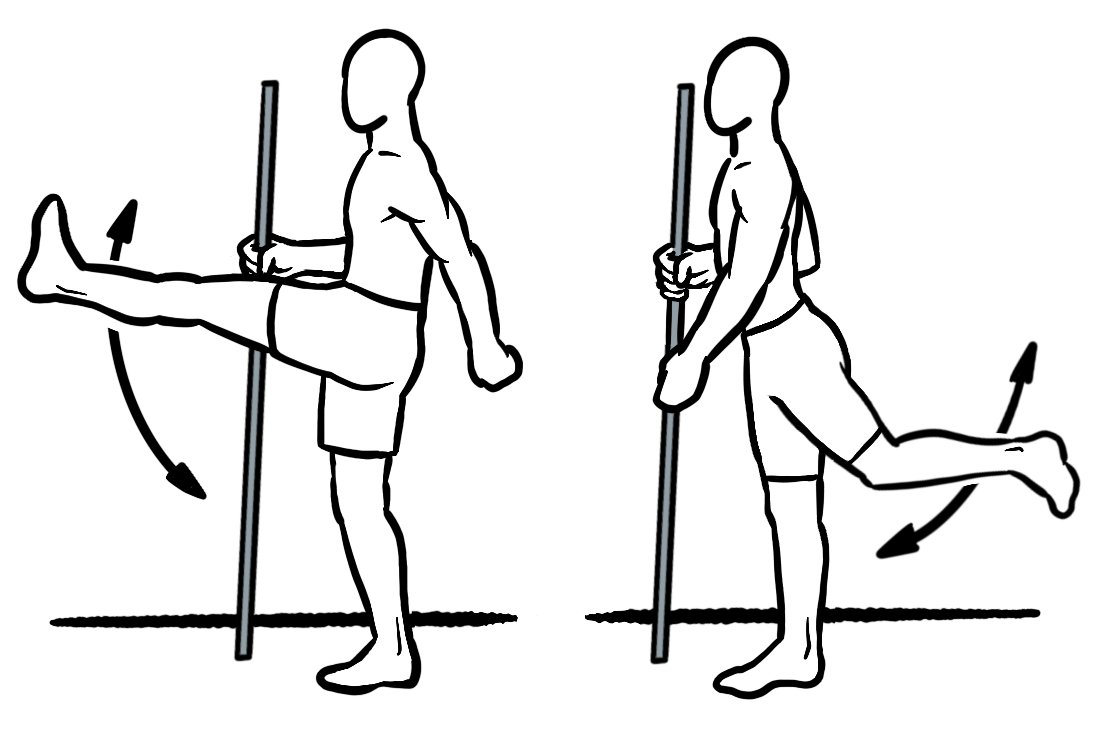
| 2 | Leg Swings (forward + lateral) | Hip mobility, dynamic hamstring length |
| 3 | High Knees | Hip flexor activation, cadence patterning |
| 4 | Butt Kicks | Hamstring activation, knee flexion range |
| 5 | Dynamic Hamstring Swings | Hamstring mobility under movement |
| 6 | Ankle Rocks | Ankle dorsiflexion range, calf preparation |
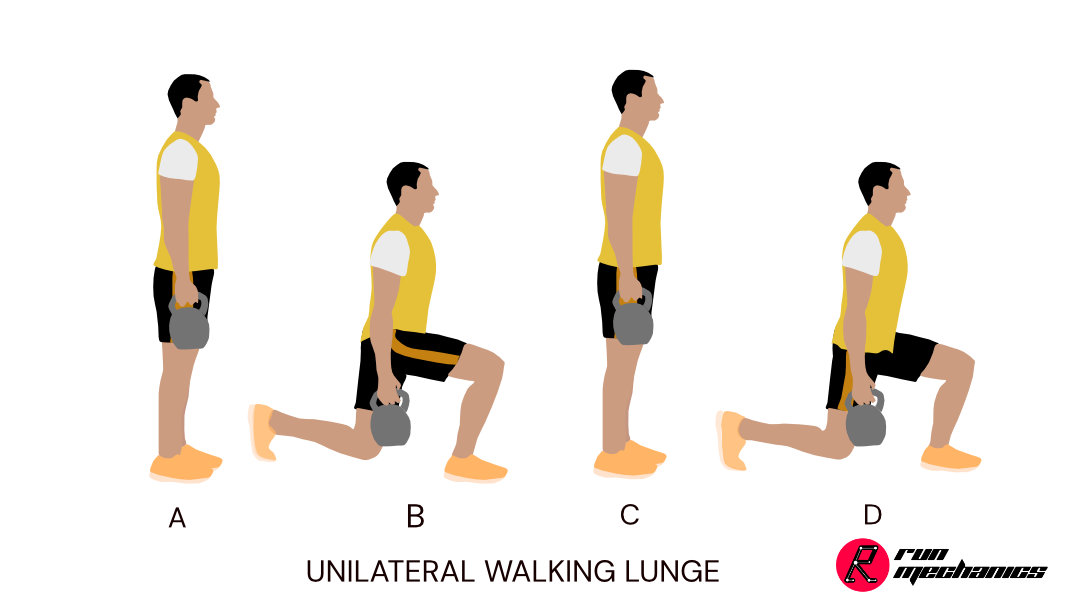
| 7 | Walking Lunges | Hip and quad mobility under load |
| 8 | Calf Raises (bodyweight, 15–20 reps) | Activate calves and Achilles complex |
Drill Reference


The warm-up is not a workout. Do not fatigue yourself. The goal is to feel prepared, not tired. If you finish the warm-up breathing hard, you did too much.
Quality Session Warm-Up
Before Tuesday hard runs (intervals, Norwegian 4×4, threshold), add 2–3 short strides at the end of the warm-up:
- Complete the standard warm-up
- Perform 2–3 × 50 m gradual accelerations to ~80% speed
- Walk back between each
These "primer" strides prepare the nervous system for high-intensity work.
What to Avoid
| Don't | Because |
|---|---|
| Static stretching | Reduces power output, does not prevent injury |
| Skipping the warm-up | Cold muscles at running intensity = heightened injury risk |
| Foam rolling before running | Better placed post-run or on rest days |
| Excessive warm-up | Creates unnecessary fatigue before the session begins |
If you are short on time, do not skip the warm-up, shorten the run instead. A 20-minute run with a proper warm-up is better than a 30-minute run that starts cold and ends with an injury.
Weather Adjustments
| Condition | Adjustment |
|---|---|
| Hot weather | Standard warm-up is sufficient |
| Cold weather | Extend light jogging to 5 minutes; consider warming up indoors |
| Rain | Standard warm-up, be mindful of slippery surfaces during dynamic work |
| Early morning | Extend warm-up slightly: body temperature is lowest upon waking |
Research consistently demonstrates that dynamic warm-up protocols improve running economy by 2–3% in subsequent efforts, primarily through increased muscle temperature (improving contraction velocity) and neural activation (improving motor unit recruitment patterns). The effect size is small but meaningful, over a 2.4 km run, 2% economy improvement translates to approximately 14 seconds.