Strides
Short accelerations to improve running mechanics, cadence, neuromuscular coordination, and running economy, minimal fatigue, maximum technical benefit.
Strides are short, controlled accelerations performed at approximately 90–95% of maximum speed. They are not a conditioning workout; they are a technique workout, designed to improve running mechanics without accumulating fatigue.
Purpose
Strides develop:
- Running economy (energy cost at a given pace)
- Cadence (steps per minute)
- Neuromuscular coordination
- Ground contact efficiency
- Stride power and stiffness
- Relaxation at speed
These are technical adaptations, not metabolic ones. Strides make you more efficient, not necessarily fitter.
Execution
| Parameter | Guideline |
|---|---|
| Repetitions | 6–8 × 20–30 seconds |
| Intensity | ~90–95% of maximum speed |
| Recovery | 60–90 seconds walking |
| Surface | Flat, even ground (track or smooth pavement) |
| Total Duration | ~25–30 minutes |
Session Structure
- Warm-up: 10 minutes easy jogging + dynamic stretches
- 6–8 × 20–30 seconds: Gradual acceleration to ~90% max speed, hold for 5–10 seconds, gradual deceleration
- Recovery: Walk back to start between reps
- Cool-down: 5–10 minutes easy jogging
A stride should feel fast but relaxed. If you are straining, grimacing, or losing form, you are running too hard. The goal is speed with ease, the same feeling you want at the end of a well-paced 2.4 km.
How to Run a Stride
A stride has three phases:
| Phase | Duration | Description |
|---|---|---|
| Acceleration | ~10 seconds | Gradually build speed from jog to ~90% max |
| Hold | ~5–10 seconds | Maintain speed with relaxed, efficient form |
| Deceleration | ~5–10 seconds | Gradually slow to a walk |
The entire rep should feel smooth, controlled, and athletic, never frantic.
What to Focus On
Each stride session can emphasise one technical element.
| Focus | What to Feel |
|---|---|
| Cadence | Quick, light foot contacts: "hot coals" |
| Posture | Tall hips, slight forward lean from ankles |
| Arm Drive | Compact arm swing, elbows ~90°, hands relaxed |
| Ground Contact | Brief, quiet foot strikes: minimise braking |
| Relaxation | Jaw loose, shoulders down, hands soft |
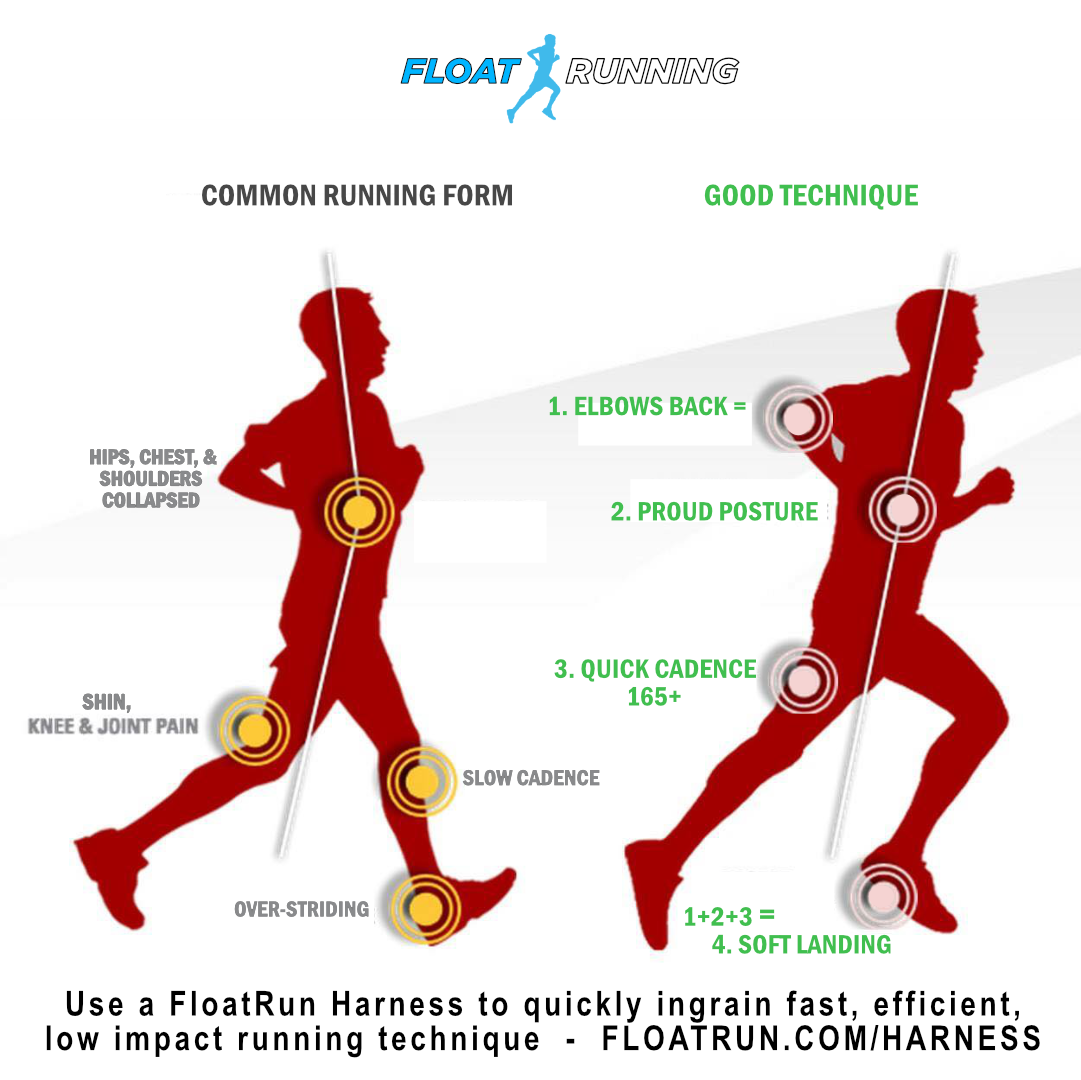
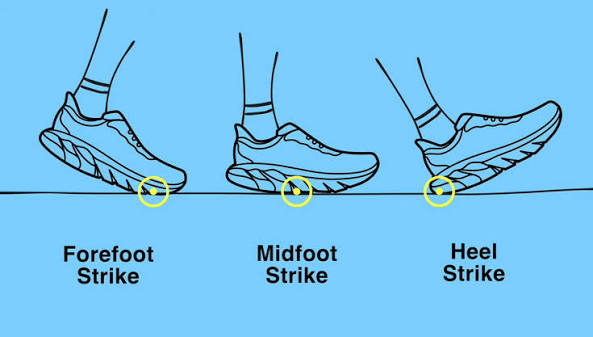
Rotate focus across sessions. One week emphasise cadence, the next week posture, the following week relaxation. This prevents overthinking and builds a complete technical foundation.
Benefits
Strides provide high technical return for minimal fatigue cost.
| Benefit | Mechanism |
|---|---|
| ↑ Cadence | Neuromuscular patterning of faster turnover |
| ↑ Economy | Reduced ground contact time, better elastic recoil |
| ↑ Relaxation | Practising efficient movement at high speed |
| ↑ Stride Power | Brief high-force application without fatigue |
| ↑ Confidence | Familiarity with speed reduces race anxiety |
Strides improve running economy primarily through neuromuscular adaptation, the nervous system becomes more efficient at recruiting motor units in coordinated patterns. Unlike metabolic adaptations (which require sustained effort), neuromuscular improvements can be achieved with very brief exposures to high speed, making strides one of the highest-ROI sessions in the programme.
Common Mistakes
Sprinting
Strides are ~90–95% of maximum, not 100%. Sprinting introduces unnecessary injury risk and shifts the focus from technique to effort. If you cannot maintain relaxed form, you are running too fast.
Too Many Repetitions
Strides are technical work, not conditioning. More than 8 reps provides diminishing returns and accumulates unnecessary fatigue. If you want more speed work, add it to Tuesday's hard run, not the strides.
Skipping Recovery
Walking back between strides is essential. It restores ATP-PCr stores and allows each subsequent stride to be performed with high quality.
Running Strides on Tired Legs
Strides demand freshness. If legs are heavy from the previous day's session, consider postponing. Poor-quality strides reinforce poor-quality movement patterns.
Think of strides as "practice," not "training." A musician playing scales is not trying to exhaust themselves; they are refining technique. Strides serve the same purpose for running.